Dementia care in Bedfordshire
Dementia Care at Home, Built Around Familiar Routines
Support for someone living with dementia to stay in the home they know, with familiar carers, a steady routine and a team who keep the family in the loop.
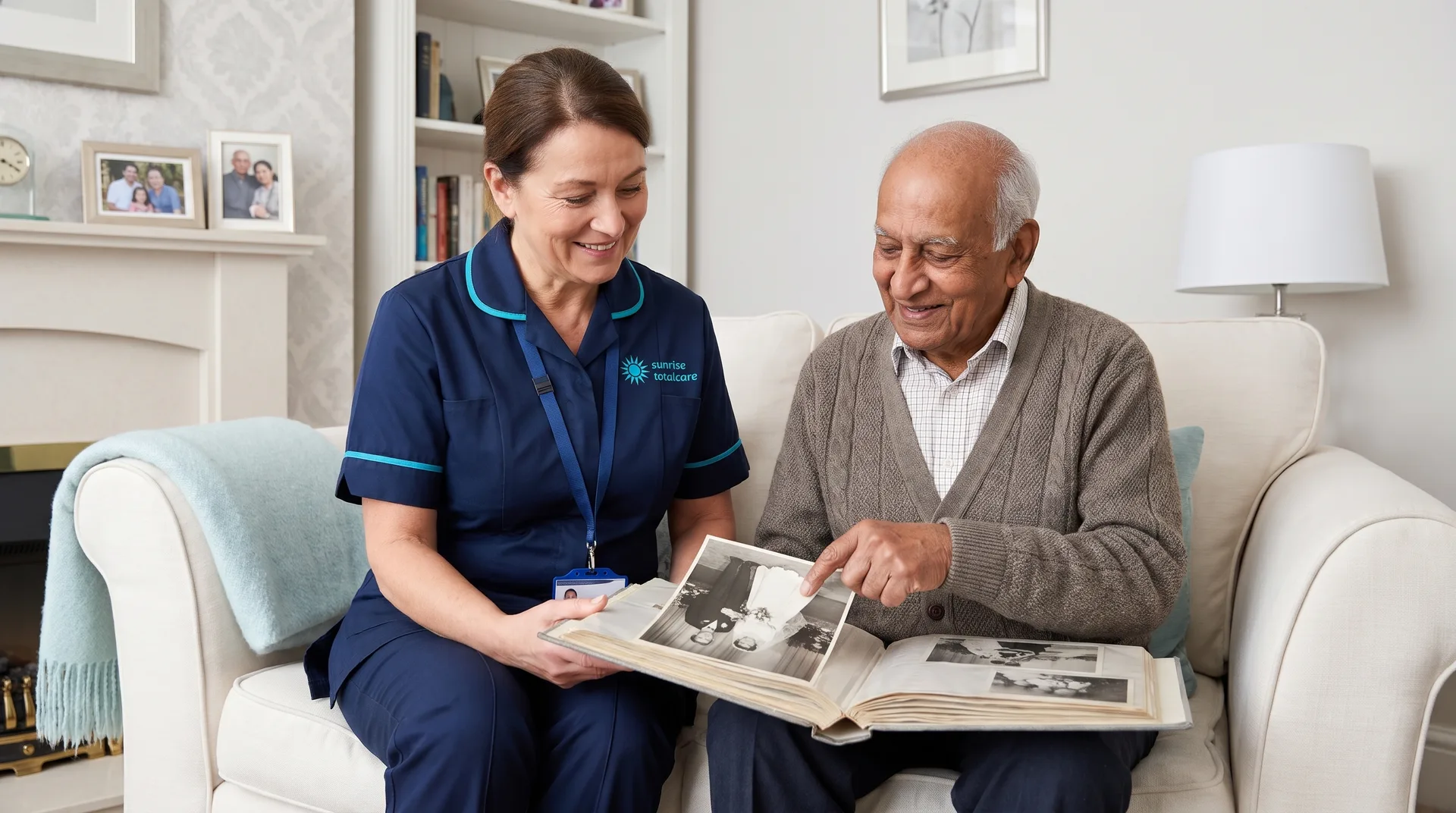
What Dementia Care at Home Means
Dementia affects memory, mood and how a person makes sense of the world around them. Home is often where someone feels most settled, because the rooms, objects and daily rhythms are already familiar.
Dementia care at home means a trained carer visits at agreed times to help with the parts of the day that have become harder. That might be getting washed and dressed, eating well, taking medication at the right time or simply having calm company in the afternoon. The aim is not to take over. It is to keep the person doing as much as they can for themselves, safely, for as long as possible, while giving the family real support and peace of mind.
Who It Can Help
A recent diagnosis.
Your mum has just been diagnosed and you want support in place early, before things become difficult.
Missed meals or medication.
Your dad lives alone and you are worried he is forgetting to eat or take his tablets.
A family carer under strain.
You care for your husband or wife and need regular help so you can keep going.
Afternoons that feel unsettled.
Your relative becomes anxious or confused later in the day and benefits from calm, steady company.
What Our Dementia Support Can Include
- Help with washing, bathing, dressing and continence care, at a pace that feels comfortable
- Preparing meals and drinks, and gentle encouragement to eat and stay hydrated
- Medication prompts and support, as set out in the care plan
- Keeping a steady daily routine, including getting up and going to bed
- Light housework, laundry and keeping the home safe and uncluttered
- Companionship, conversation and activities the person enjoys
- Accompanying the person on short walks, local trips or appointments
- Noting changes in mood, health or behaviour and sharing them with the family
What Is Not Included
We want to be clear from the start so there are no surprises.
- Nursing or clinical tasks, such as injections, wound care or catheter changes
- Diagnosis, medical advice or changes to prescribed medication
- Restraint, locking someone in or restricting their freedom
- Round-the-clock supervision, unless agreed separately through overnight or live-in care
If your relative needs clinical care, we can work alongside district nurses, GPs and memory services.

Care Shaped Around the Person, Not the Diagnosis
Routines: the order of the morning, how they like their tea, when they prefer to rest.
Communication: short, clear sentences, plenty of time to respond and a calm tone of voice.
Culture and faith: prayer times, dress, food preferences and language spoken at home.
Meaningful activity: gardening, music, baking, photographs or a favourite radio programme.
This becomes part of the care plan, so every carer who visits knows the person, not just the tasks.
Visit Options
Short visits
For medication prompts, meals or checking someone is safe.
Longer visits
For personal care, activities and companionship.
Morning, lunchtime, teatime and evening visits
To support the whole day.
Weekend visits
Visits can increase as needs change. We will talk you through what is realistic and fair at your assessment.
Carers Who Understand Dementia
- Dementia awareness training before supporting anyone living with dementia
- Induction and Care Certificate training
- Enhanced DBS checks before their first visit
- Regular supervision and spot checks from a senior team member
Our carers learn to notice what a person may be trying to say through behaviour, and to respond with patience rather than correction.

Dementia Care Across Bedfordshire
We currently support people in and around Silsoe, Flitwick, Ampthill, Barton-le-Clay, Shefford and Bedford.
- Silsoe
- Flitwick
- Ampthill
- Barton-le-Clay
- Shefford
- Bedford
How to Get Started
- 1
Talk to us.
Call or send an enquiry. Tell us what is happening and what worries you most. - 2
We visit and listen.
We meet you and your relative at home, ideally at a calm time of day, and agree a care plan together. - 3
Care begins gently.
We introduce carers in a steady way and check in with you during the first few weeks.
Ask About Dementia Care
Tell us a little about the person you are looking for support for. We will call you back to talk things through. We aim to reply [RESPONSE TIME].
Or call us: [PHONE]
For independent advice and emotional support, you can also contact Alzheimer's Society (opens in a new tab) or Dementia UK (opens in a new tab).